Franchise SEO Services That Work for Franchisor and Franchisee
Most franchise SEO fails on politics rather than tactics. Who controls the Google profile, who pays, what happens when a location opts out, and why your own locations compete with each other. We solve those first.
We Solve the Franchise Politics First
Brand consistency, profile ownership, territory overlap and franchisee buy-in are the reasons franchise programmes stall. Tactics are the easy part. We plan for the organisational reality before we touch a page.
What Is Franchise SEO?
Franchise SEO is multi-location search optimization inside a business structure where the brand and the locations are owned by different people. That ownership split is what makes it genuinely different from ordinary multi-location SEO.
A company with fifty branches can mandate a change and it happens. A franchise with fifty franchisees has fifty business owners, fifty budgets, fifty opinions, and fifty Google Business Profiles that somebody has to control. The tactics are similar. The delivery problem is completely different.
The two jobs running at once
Brand-level authority. The main domain has to rank nationally, hold the brand terms, and pass authority down to every location page. This is franchisor work and it benefits everyone.
Location-level visibility. Each franchisee needs to appear in their own map pack, against independent local competitors who are often better optimized than the franchise. This is where individual revenue actually comes from.
Why franchise is harder than multi-location
Why Franchise SEO Fails, and It Is Rarely the Tactics
Every franchise SEO page online lists the same tactics: location pages, local citations, Google Business Profiles. Those are correct and they are not the hard part. These are the problems that actually stall programmes, and no competitor page we reviewed mentions any of them.
Nobody knows who owns the Google profiles
Some were claimed by the franchisee, some by a previous agency, some by an employee who left three years ago. Until ownership is consolidated under a single manageable structure, nothing else can be executed consistently. This is the first job on almost every engagement.
Franchisees running their own marketing
A franchisee hires a local agency who builds a separate site targeting the same terms as their own location page. Now the brand competes with itself, and neither ranks properly. Common, expensive, and entirely preventable with a governance agreement.
Who pays, and who benefits
Brand-level work benefits everyone but is usually funded centrally. Location-level work benefits one franchisee. Programmes stall when franchisees feel they are funding brand marketing, or when the franchisor feels it is subsidising individual owners.
Territory overlap in search
Two franchisees with adjacent territories both want to rank in the suburb between them. Google does not respect your franchise agreement. Without a documented rule for which location owns which search area, this becomes a recurring dispute.
Franchisees who opt out
If participation is voluntary, coverage becomes patchy and the brand looks inconsistent in search. The fix is rarely coercion. It is showing non-participating franchisees per-location data proving what the programme produced for the ones who joined.
What happens when a location closes
Franchisees leave, territories get resold, locations relocate. Every one is a URL, profile and citation decision. Handled badly it leaves orphaned pages, stale profiles and inconsistent data that damages the whole network.
How we work with the structure, not against it
Governance before tactics. A written agreement covering profile ownership, what franchisees may and may not do independently, and who owns which search territory. Boring, and it prevents most of the problems above.
Per-location reporting from day one. Every franchisee sees their own calls, directions and rankings. This is what converts sceptics into participants, because it turns an abstract brand programme into their own numbers.
Templates that scale without duplicating. Location pages built from a common structure with genuinely unique local content, so you get consistency without triggering the duplicate content problems that flatten most franchise networks.
What the governance document covers
Find out what is actually stalling your network
Our franchise audit covers technical health and per-location visibility, then adds the part others skip: profile ownership mapping, cannibalization analysis and territory conflict detection.
Your Locations Are Competing With Each Other
This is the most under-diagnosed issue in franchise SEO. It does not show in standard reporting, it gets worse as the network grows, and by the time anyone notices, rankings have been flat for a year.
How it happens. Fifty location pages built from one template, each optimized for the same service keywords with only the city name changed. Google has to decide which represents the brand for any given query, and it frequently picks badly or ranks none of them well.
It gets worse with scale. Ten near-identical pages is manageable. Two hundred is a duplicate content problem that suppresses the entire network, including your strongest locations.
And it is invisible in normal reports. Aggregate traffic can look stable while individual locations quietly lose the map pack to independent competitors who wrote genuinely local pages.
Signs of location cannibalization
How we fix it
Territory mapping
A documented rule for which location targets which geographic area, agreed with franchisees before pages are built rather than argued about afterwards.
Genuinely unique local content
Real detail per location. Local landmarks, service area specifics, staff, local case studies. Not the same paragraph with a city name substituted.
Internal linking that separates
Link structures that make each location page distinct in Google’s understanding rather than a set of near duplicates competing for the same intent.
Per-location schema
LocalBusiness markup with unique geo-coordinates, service areas and identifiers, so each location is a distinct entity rather than a variant.
What we deliver
Our Franchise SEO Services
Scoped to network size, ownership structure and how much control the franchisor actually has. A ten location network and a four hundred location network need different systems.
Governance and brand standards
Documented rules covering profile ownership, franchisee permissions, territory allocation and content approval. The foundation everything else depends on.
Google Business Profile at scale
Ownership consolidation, bulk optimization, category and service area configuration, posting programmes and Q&A management across every location.
Location page architecture
Scalable templates with genuinely unique local content, per-location schema, and internal linking designed to prevent cannibalization from day one.
Citation management at scale
Consistent business data across 80+ directories for every location, duplicate removal, and monitoring so drift is caught before it damages rankings.
Review generation and response
Automated request workflows per location, response templates that hold brand voice, and reputation monitoring across the full network.
Brand-level authority building
National rankings, brand term protection and digital PR at the franchisor level, which lifts every location page beneath it.
Technical SEO for multi-location
Crawl budget across hundreds of location URLs, duplicate content control, site architecture that scales, and Core Web Vitals on templates.
Per-location reporting
Every franchisee sees their own geo-grid, calls, directions and rankings. The franchisor sees the network view with drill-down.
Onboarding and offboarding
Documented process for new locations joining and departing ones exiting, so the network stays clean as territories change hands.
Franchise Locations in AI Recommendations
Consistency matters more here than anywhere
People ask AI assistants for local recommendations constantly, and franchises have a specific vulnerability: inconsistent data across locations produces a fuzzy brand entity, and a model will not confidently recommend a business it is unsure about.
If twenty of your locations have complete, consistent data and thirty do not, the inconsistency affects how models understand the whole brand, not just the weak locations.
The upside is real though. A franchise with genuinely consistent data across every location has a stronger entity signal than any independent competitor can build, because you have fifty corroborating sources describing the same brand identically.
What decides whether AI names a location
All five overlap directly with strong local SEO, so you are not funding two programmes.
Brand entity consistency across every location
One brand description, one category structure, one set of service definitions, applied identically everywhere. Fifty consistent sources build an entity signal no independent competitor can match.
Per-location structured data
LocalBusiness schema with unique geo-coordinates, service areas, hours and identifiers for every location, plus Organization schema tying them to the parent brand.
Review language, not just rating
Models read what reviews say. Programmes that encourage specific, attribute-rich reviews teach models which queries to surface each location for.
Network-wide AI visibility tracking
We test a defined prompt set per market across ChatGPT, AI Overviews, Perplexity and Gemini, and report which locations get named and which competitors appear instead.
Our Franchise SEO Process
Governance and ownership first, because tactics executed on an ungoverned network produce inconsistent results and franchisee frustration.
1 to 4
Audit and ownership mapping
Full technical crawl, per-location geo-grid rankings, citation consistency across the network, and cannibalization analysis. Plus the part others skip: mapping who currently controls every Google profile, and interviewing franchisees about what has and has not worked before.
4 to 6
Governance and territory agreement
Written standards covering profile ownership, franchisee permissions, territory allocation and content approval. Agreed with both franchisor and a franchisee representative group before execution starts.
2 to 4
Foundation across the network
Profile ownership consolidated and optimized, citations cleaned at scale, location page templates rebuilt with unique content, per-location schema deployed, and review automation live.
4 to 8
Authority and local content
Brand-level digital PR and link building, genuinely local content per location, and expansion into adjacent search territories where no franchisee conflict exists.
8+
Scale, defend and onboard
New locations onboarded to the same standard, departing locations cleanly offboarded, cannibalization monitored continuously, and per-location reporting used to bring reluctant franchisees into the programme.
Proof, not promises
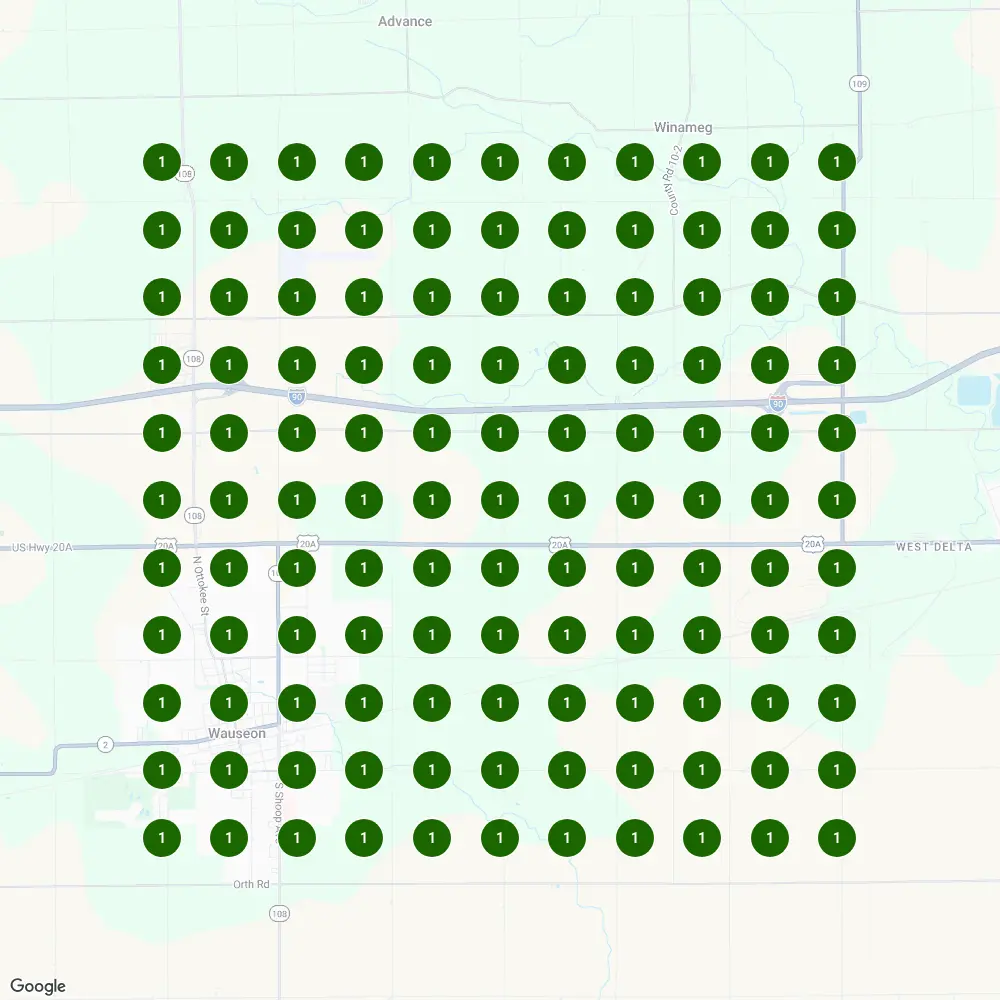
Real Results: 100% #1 Rankings Across an Entire Service Area
A single-location service business rather than a franchise network, shown because the geo-grid discipline and per-location schema work is exactly what we apply at every location in a franchise engagement.
Water services company, Ohio: from invisible to #1 everywhere
Almost no Google visibility despite years in business and a strong local reputation. We consolidated profile control, rebuilt the site architecture, corrected business data across 80+ directories, deployed per-location schema, and built out genuinely local service pages.
Six months, zero ad spend, #1 at every single tracked point across the full service area.
Why Franchises Choose Hyxil
We solve the politics, not just the tactics
Profile ownership, territory allocation, franchisee permissions and offboarding. The reasons franchise programmes actually stall.
Per-location reporting from day one
Every franchisee sees their own geo-grid, calls and directions. This is what converts sceptical owners into willing participants.
We prevent cannibalization by design
Territory mapping and genuinely unique local content built in from the start, rather than diagnosed two years later when rankings have flatlined.
We build the websites too
WordPress and Next.js in house. Location page templates, schema and technical changes get implemented rather than recommended.
12 years, since 2014
Through Pigeon, Possum, the local pack changes and now AI recommendations. Agencies built on shortcuts do not survive those.
Senior people, no lock-in
You work with the strategist doing the thinking, month to month, because we would rather keep you by performing.
Built for networks, not just locations
Governance, scale and per-location accountability. One senior team.
Ready to get your whole network ranking?
Request a franchise SEO audit covering technical health, per-location visibility, profile ownership mapping and cannibalization analysis across your network.
Questions