Enterprise SEO Services Built for Scale and Stakeholders
Thousands of URLs. Multiple approval layers. A development queue measured in quarters. Enterprise SEO fails on organizational friction far more often than on strategy, so we solve for both.
We Solve the Real Blocker
At enterprise scale the strategy is rarely the problem. Getting changes shipped is. We write specifications your developers can action and business cases your stakeholders approve.
What Is Enterprise SEO?
Enterprise SEO is search optimization for large, complex websites inside organizations with multiple stakeholders, formal approval processes, and constrained development resources.
The difference isn’t just site size. At enterprise scale, the hardest part of SEO stops being knowing what to do and starts being getting it done.
Do you actually have enterprise SEO problems?
It isn’t only about page count. You likely have enterprise SEO problems if any of these describe your situation.
Site size is not the definition
A 500-page site inside a company with quarterly release cycles, legal review and brand approval has enterprise SEO problems.
A 50,000-page site run by one person who can deploy on a Tuesday afternoon does not.
The constraint is organizational, not technical. Any agency that defines enterprise purely by URL count has not worked inside one.
The three pillars of enterprise SEO
Most agencies deliver the first. Very few deliver all three.
Why Enterprise SEO Fails, and It’s Rarely the Strategy
We have reviewed enterprise SEO programmes that were technically excellent and never shipped a single change in twelve months. This is the failure mode almost no agency page mentions, because admitting it means admitting that SEO expertise alone is not enough.
The development queueYour recommendations enter a backlog behind product features, security patches and platform migrations. Without a business case and a ready-to-action ticket, SEO work loses that prioritization argument every single time.
Approval chainsLegal review changes your title tags. Brand rejects your meta descriptions. Compliance requires a disclaimer that breaks your schema. Each round adds weeks, and nobody budgeted for the rounds.
Stakeholders with different definitions of successYour CMO wants revenue. Your product team wants site performance. Your content team wants publishing velocity. An SEO programme that does not serve all three loses support quietly, then loses budget loudly.
Reporting nobody outside SEO can readKeyword position reports do not secure budget. Leadership needs contribution to pipeline and revenue, presented in language they already use in every other meeting.
How we work with the friction, not against it
Four things we do differently, each aimed directly at one of the blockers above.
Find out what has actually been blocking your SEO
Our enterprise audit covers technical health and competitive position, then adds the part other agencies skip: stakeholder interviews to map where decisions get made and what has stalled before.
Our Enterprise SEO Services
Every engagement is scoped to your site scale, market count and internal constraints. Never a fixed package applied to a business it was not built for.
Enterprise technical SEO
Crawl budget optimization at scale, log file analysis, indexation management across thousands of URLs, JavaScript rendering, and site architecture built to scale rather than patched.
Programmatic optimization
Template systems for titles, meta descriptions, schema and internal linking that apply intelligently across large page sets, with rules that hold up as the site grows.
Governance frameworks
Documented SEO standards, publishing guidelines, QA checklists and team training, so quality holds as people rotate and agencies change.
International & multi-market
Hreflang implementation and validation, market-specific keyword research, localization strategy that goes beyond translation, and per-market performance tracking.
Multi-brand & multi-site
Portfolio architecture, cannibalization control across properties, shared-authority strategy, and consolidated reporting with brand-level drill-down.
Executive reporting
Revenue attribution, share of voice, competitive benchmarking and forecasting, presented in the format your leadership already uses for every other channel.
AI search at scale
Entity optimization across a large brand footprint, programmatic structured data, brand accuracy monitoring, and AI visibility reporting across four engines.
Migration support
Replatforming, domain consolidation and URL restructures. Planning, redirect mapping, staged testing and post-launch monitoring on the highest-risk event any large site faces.
Stakeholder enablement
Business cases, developer-ready specifications, training sessions and internal advocacy materials that get SEO work approved and shipped rather than shelved.
Three Enterprise SEO Problems Most Agencies Miss
These are specific to large sites, expensive when ignored, and almost never covered on competitor pages. If your current agency has not raised them, ask why.
Keyword cannibalization at scale
On a large site, multiple pages competing for the same query is near-inevitable. Product pages compete with category pages. Blog posts compete with service pages. Regional pages compete with each other.
Google has to choose which one to rank, and it frequently chooses badly. The result is a plateau: you keep publishing, keep building links, and rankings stop moving because your own pages are splitting the signal.
This is a leading cause of stalled enterprise SEO programmes, and it is completely invisible unless somebody is actively mapping intent to URLs.
Crawl budget waste
Googlebot allocates a finite crawl budget to your site. On an enterprise property, faceted navigation, session parameters, pagination, and legacy URLs can consume the majority of it before Googlebot reaches the pages that generate revenue.
You cannot see this in a standard SEO tool. It requires log file analysis, which most agencies do not run because it is slow and unglamorous.
Ask your current agency what percentage of your crawl budget is being spent on pages that cannot rank. If they cannot answer, nobody has looked.
Migration risk
Replatforming, domain consolidation and URL restructures are the highest-risk events a large site can undertake. They are also the most common cause of catastrophic organic traffic loss, and the loss is frequently permanent.
The pattern is consistent: SEO gets consulted after the architecture is locked, redirects get written as an afterthought, and nobody tests on staging with a full crawl before launch.
If a migration is on your roadmap, involve SEO before decisions are final rather than after launch. Recovery costs several times what prevention does.
Enterprise AI Search: Bigger Opportunity, Bigger Risk
Large brands have an advantage and a liability
The opportunity: large brands already have the entity footprint, authority and content depth that AI models weight heavily. Structured properly, you get cited far more readily than smaller competitors can manage.
The liability: AI models make confident claims about large brands. Outdated pricing, discontinued products, wrong executive names, or a controversy from four years ago get repeated as current fact, at scale, to thousands of prospects, and completely invisibly.
You cannot edit an AI model. You can correct the sources it learned from, then reinforce the accurate version until consensus shifts. That work takes months, which is why it should start now rather than after somebody notices.
What we test on every enterprise account
Across ChatGPT, Google AI Overviews, Perplexity and Gemini. Reported monthly.
Our five-layer enterprise AI stack
Entity architecture across a large footprint
Organization, brand, product and location entities defined and made consistent across your site, subsidiaries, directories, knowledge bases and press coverage. At enterprise scale this is the highest-leverage work available.
Programmatic schema at scale
Structured data deployed via templates across thousands of URLs, with validation monitoring so errors surface immediately rather than at the next quarterly audit.
Answer-first content standards
Governance documentation so every team publishing content produces retrievable, extractable passages. Not just the pages your SEO agency happened to touch.
Brand accuracy monitoring and correction
Structured prompt testing across four engines. When an answer is wrong, we trace it to the source that taught the model, correct it there, and reinforce the accurate version.
AI share of voice reporting
Citation frequency and competitive share of voice, reported monthly alongside traditional rankings so leadership sees both channels in one view.
Reporting That Survives a Board Meeting
Enterprise SEO budgets are lost in reporting more often than in performance. Keyword positions do not justify spend to a CFO. Here is what we report, and to whom.
Automation that makes enterprise scale manageable
Enterprise SEO generates enormous monitoring overhead. Thousands of URLs to check, dozens of markets to track, four AI engines to test, and a deployment pipeline that can break something on any given Tuesday.
Our n8n-certified engineers automate the watching, which means problems surface in days rather than at the next quarterly review. Most agencies handle this manually or not at all, because they are marketers rather than automation engineers.
What we automate
Our Enterprise SEO Process
Five phases, sequenced for momentum. We ship visible wins early to build internal credibility, then use that credibility to get the harder work approved.
1 to 4
Discovery and technical audit
Full crawl and log file analysis, indexation review, competitive benchmarking, content inventory, cannibalization mapping, and AI visibility testing. Plus internal stakeholder interviews to map where decisions actually get made and what has blocked SEO work before. That last part matters more than most agencies admit.
4 to 6
Strategy and business case
Prioritized roadmap sequenced by impact and shippability, projected outcomes, resource requirements, and a business case written for stakeholder approval rather than for SEO people. Presented to your team and to leadership separately, because they need different things.
2 to 4
Foundation and quick wins
Ship the highest-impact changes that clear approval fastest, building momentum and internal credibility. Simultaneously begin scoping the longer-lead technical work so it is specification-ready when the development queue opens.
4 to 9
Scale
Programmatic optimization rolled out across page sets, content programme running to governance standards, international or multi-brand work progressing, and AI optimization deployed across the footprint.
9+
Optimize and defend
Continuous monitoring, competitive response, cannibalization management, expansion into new markets or verticals, and quarterly governance reviews to stop quality decaying as teams change.
Real Results: 100% #1 Rankings Across an Entire Service Area
A single-brand engagement rather than a multinational, but the discipline transfers directly. The architecture, programmatic schema and technical foundation behind this result is the same work applied at enterprise scale.
Water services company, Ohio: from invisible to #1 everywhere
Years in business, excellent reputation, almost no Google visibility. Incomplete business profile, inconsistent data across 80+ directories, and one generic page trying to rank for every service in every area. We rebuilt the site architecture, cleaned every directory listing, deployed schema across 10+ location pages, and put monitoring in place.
Calls climbed from 75 to over 90 per month between March and July. Not “#1 at head office fading outward” but #1 at every tracked point, with zero ad spend.
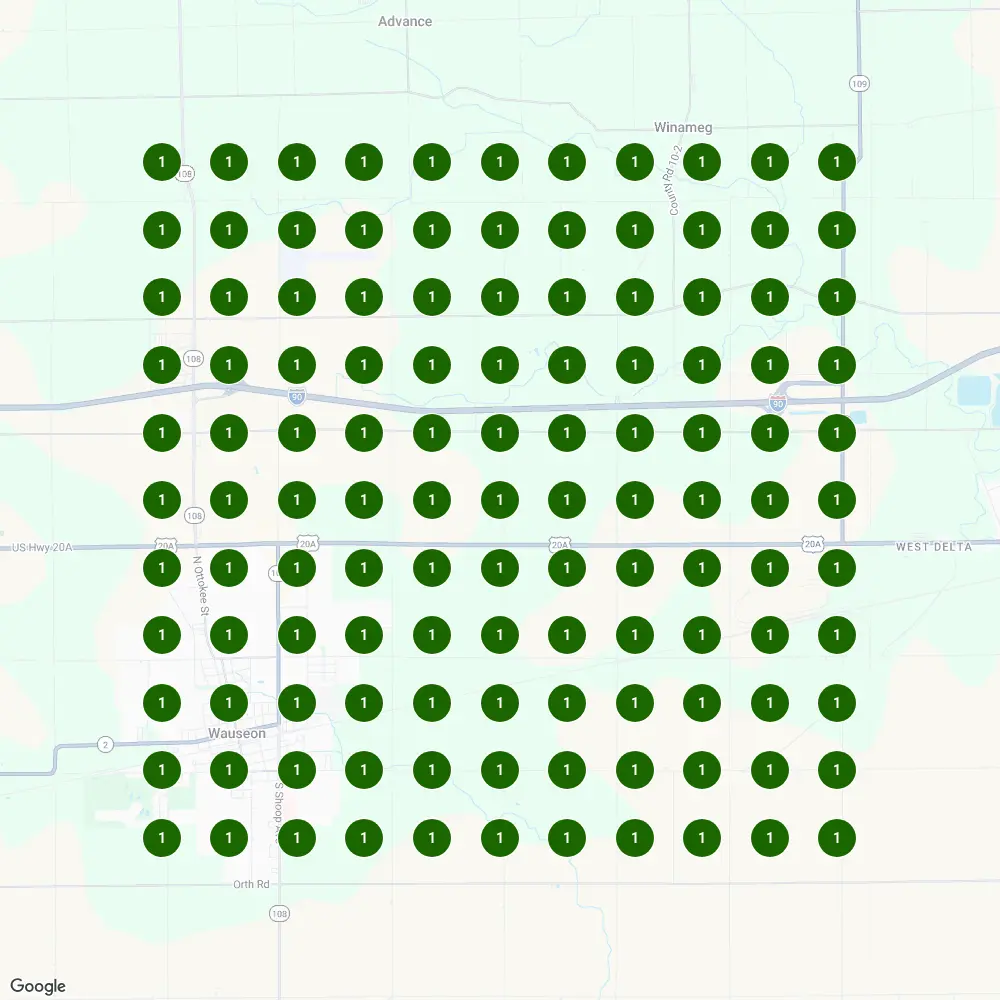
Data: Google Business Profile Insights, March to August 2026
Why Choose Hyxil as Your Enterprise SEO Agency
We solve for execution, not just strategy
Business cases, developer-ready specifications and stakeholder materials, because a recommendation that never ships is worth nothing regardless of how correct it was.
12 years of algorithm changes, since 2014
Through Panda, Penguin, Pigeon, BERT, the helpful content updates and now the AI transition. Longevity is the most useful single signal about an SEO partner.
Senior people on your account, always
No junior account managers relaying messages between you and someone who understands the work. You talk directly to the strategist doing the thinking.
We work inside your existing stack
Conductor, BrightEdge, Botify, seoClarity, Semrush Enterprise. Whatever you already own. No forced platform migration, no partnership commissions influencing the recommendation.
Automation at scale
n8n-certified engineers building monitoring, reporting pipelines and regression detection that manual processes cannot match at enterprise volume.
Honest about constraints, and no lock-in
We tell you what is achievable given your dev capacity and approval process before you sign, not after. No long-term contracts, because we would rather keep you by performing.
A 12-year agency built for complex organizations
Scale, governance and alignment. One senior team, no handoffs, no juniors.
Ready to unblock SEO at enterprise scale?
Request an enterprise audit. We assess technical health, competitive position, and critically, what has actually been preventing SEO work from shipping inside your organization.