eCommerce SEO Services That Turn Traffic Into Revenue
Product and category pages that rank, convert, and get recommended by AI shopping assistants.
43% of eCommerce Traffic Is Organic
And it converts 22% better than everything else. We help you claim your share.
Why eCommerce SEO Matters
Every online store competes for the same shoppers in the same search results. The difference between the stores that grow and the stores that stall usually isn’t the products. It’s whether Google can find, understand, and rank the catalogue.
The data is decisive for online stores
Organic search is the largest single traffic channel in eCommerce, and the cheapest.
| Metric | What it measures | What it means |
|---|---|---|
| 43% | of all eCommerce traffic comes from organic search | More than paid, social, email or direct individually |
| 23.6% | of all online orders originate from organic search | Nearly one in four sales starts with a Google query |
| 48% | of eCommerce conversions come from organic traffic | Organic punches above its traffic share |
| 22% | better conversion rate than the average visitor | Search traffic arrives with intent already formed |
| 68% | cheaper cost per acquisition than paid search | The efficiency gap compounds every month |
| 70% | of eCommerce searches are transactional | These are buyers, not browsers |
Product pages are disproportionately valuable
They account for 51% of organic traffic but deliver 62% of organic conversions. That’s why product page optimization is rarely optional.
Structured data pays directly
Adding product schema produces an average 25% increase in organic traffic. Listings showing price, availability and ratings earn 30% higher click-through.
Speed converts
Rakuten 24 recorded a 33.13% conversion-rate increase after improving Core Web Vitals alone. No new traffic, just a faster experience.
Sources: Charle Agency (2026), First Page Sage (2025), Keyword Kick (2026), Google Core Web Vitals case studies
What ignoring eCommerce SEO actually costs you
The cost isn’t theoretical. It’s measurable, and it compounds every month you leave it.
The numbers nobody wants to see
These are the figures that decide whether your catalogue earns or sits idle.
Read that last one twice. AI Overviews have cut organic click-through by more than half on affected queries. If you’re not the store being named inside those answers, that traffic is simply gone.
Find out how much of your catalogue Google actually crawls
A free audit shows you which products and categories Googlebot reaches, which it skips, and what that gap is costing you in revenue.
How Does eCommerce SEO Work?
Four things have to happen before a shopper reaches your product page. Most stores break at step one or two, then spend their budget on step three.
Search engines crawl your catalogue
Googlebot has a finite crawl budget for your site. On a 5,000-product store with five filters, faceted navigation can generate hundreds of thousands of URL combinations. Left uncontrolled, Google spends that budget on near-duplicate filter pages and never reaches the products you actually want ranked.
This is the most common failure we find in eCommerce audits. It stays invisible until you look at log files or the “crawled, not indexed” report in Search Console.
They decide what each page is about
Once crawled, Google needs to understand the page. That comes from your titles, headings, on-page copy, internal links, and most importantly for eCommerce, your structured data.
Product schema tells Google the price, availability, brand, condition and rating explicitly, rather than making it infer them. It’s also what AI shopping assistants read. Without it you’re guessed at.
The obstacle here is duplication. Manufacturer descriptions appear on every retailer selling the same item, and variant pages duplicate each other. When several pages say the same thing, Google picks one to rank, and it often isn’t yours.
They rank pages against commercial intent
Google distinguishes between someone researching and someone buying. “Best running shoes for flat feet” and “Brooks Adrenaline GTS 23 size 10” require completely different pages.
Ranking follows relevance, authority and experience signals. In a crowded retail vertical you’re competing against Amazon, marketplaces and established retailers with far more domain authority. Winning means competing where they’re weak: long-tail terms, specific models, buying guides, and categories they treat generically.
Shoppers click, or they don’t
Ranking isn’t the finish line. Your listing competes visually against nine others.
Rich results showing price, stock status and star ratings lift click-through by around 30%. Then page speed decides whether the visitor stays. Between 68% and 75% of eCommerce traffic is mobile, and mobile shoppers abandon slow pages fast.
Elements of Successful eCommerce SEO
Six things separate stores that grow organically from stores that plateau. This is the checklist we audit against.
Technical foundation
Faceted navigation controlled so filters don’t consume crawl budget. Clean URL architecture. Core Web Vitals passing on mobile. Pagination handled correctly. JavaScript rendering verified, because if your product data loads after execution, crawlers may never see it.
Category page strategy
BIGGEST WIN
The most neglected opportunity in eCommerce SEO. “Running shoes” gets far more searches than any individual model. Category pages target higher-volume terms, accumulate more internal links, and funnel visitors into products. Most stores leave them as bare product grids. Fixing them is usually the fastest meaningful win available.
Product page optimization
Unique descriptions that don’t duplicate the manufacturer. Titles built for how people actually search, not just SKU names. Optimized images with real alt text. Internal links to related products. Reviews displayed on-page. Given product pages deliver 62% of organic conversions, this is where optimization compounds fastest.
Structured data
Complete Product, Offer, AggregateRating and Review markup covering price, availability, GTIN, brand, condition and shipping. This earns rich results in Google, and it’s what AI assistants read when recommending products. Worth 25% more organic traffic on average. Yet a third of eCommerce sites still haven’t implemented it properly.
Content that supports commerce
Buying guides, comparison pages, sizing and fit content, and category-level editorial. These capture research-phase searches and route them into your funnel. They’re also where you can beat Amazon, which treats this content generically. 91% of all searches are long-tail, and long-tail converts 2.5x higher.
Authority and trust
Product review placements, digital PR, industry coverage, and brand mentions. In a vertical where you’re competing against marketplaces, authority is what allows a smaller store to outrank a bigger one on specific terms.
Our eCommerce SEO Services
Every engagement is weighted to your platform, catalogue size, and competitive position. Never a cloned package.
Product page optimization
Unique descriptions that don’t duplicate the manufacturer, optimized titles and meta at scale, product schema with price and availability, image optimization, and internal links to related items.
Category page strategy
The highest-leverage work in most stores. Keyword-mapped category structure, genuine content on category pages, filtered-view handling, and internal linking that pushes authority where it converts.
Faceted navigation control
Deciding which filter combinations get indexed, which get canonicalised, and which get blocked. Done properly this reclaims crawl budget and consolidates authority onto pages that can actually rank.
Technical eCommerce SEO
Crawl budget optimization for large catalogues, pagination handling, Core Web Vitals on heavy templates, JavaScript rendering, and clean URL architecture that scales.
Product schema & feed optimization
Complete structured data for products, offers, reviews and availability, plus shopping-feed hygiene so Google Shopping and AI assistants see the same price, stock and identity as your store.
Product lifecycle management
A documented policy for discontinued, seasonal and out-of-stock products so you stop bleeding authority every time the catalogue changes.
Commercial content
Buying guides, comparison pages, and category-level content that captures research-phase searches and routes them into your funnel.
Authority & digital PR
Digital PR, product review placements, and links from sources that carry weight in your vertical.
AI shopping optimization
Entity clarity, answer-first product copy, and citation tracking across ChatGPT, AI Overviews, Perplexity and Gemini, so AI assistants name your store instead of a competitor.
Not sure which of these your store needs first?
That’s what the audit is for. We identify the highest-impact fixes for your specific catalogue, platform and competition, then sequence them by revenue impact.
Be the Store AI Recommends: Show Up in ChatGPT and AI Overviews
Why AI shopping matters now
Product research has moved, and faster than most retailers realise.
The volume is still smaller than traditional search, but the quality isn’t. Visitors arriving from AI search are worth 4.4x more in conversion value than a standard organic visitor, because the AI has already done the comparison work before sending them.
There’s a defensive reason too. Brands cited in AI Overviews earn 35% more organic clicks than rivals that aren’t cited, even for the same query.
The shift is already measurable
How we get your products cited
AI engines don’t rank pages. They retrieve passages and read structured data. Five things determine whether they name your store.
Complete product schema
Price, availability, brand, GTIN, condition, ratings. AI assistants read structured data directly, so incomplete markup means you’re inferred rather than cited.
Entity clarity for your brand
Models build an entity for your store from every mention across the web. Consistent brand data, clear category taxonomy, and disambiguation from similarly-named retailers determine whether a model names you confidently.
Answer-first product content
Specifications and use cases leading, marketing prose second. AI extracts passages, so buried facts don’t get retrieved.
Review sentiment and specificity
Models read what reviews say, not just the average. Reviews mentioning fit, durability or shipping speed teach a model which queries to surface your products for.
Continuous visibility tracking
We test whether ChatGPT, AI Overviews, Perplexity and Gemini recommend your products against a defined prompt set, and which competitors they name instead.
Sources: Adobe Analytics (Q1 2026), Content Refresher (2026)
Real Results: 100% #1 Rankings Across an Entire Service Area
Different vertical, same discipline. The technical foundation, schema implementation and structured data work behind this result is exactly what makes an eCommerce catalogue crawlable and citable.
Water services company, Ohio: from invisible to #1 everywhere
Years in business, excellent local reputation, almost no Google visibility. Incomplete business profile, messy data across 80+ directories, one generic homepage trying to rank for every service. We rebuilt the profile and photo strategy, cleaned every directory listing, rebuilt the website with proper architecture, and launched 10+ pages with full schema.
62% found them via Google Search on mobile, 27% on desktop, 11% via Maps. Calls climbed from 75 to over 90 per month between March and July. Not “#1 at the office fading outward” but #1 at every tracked point, with zero ad spend.
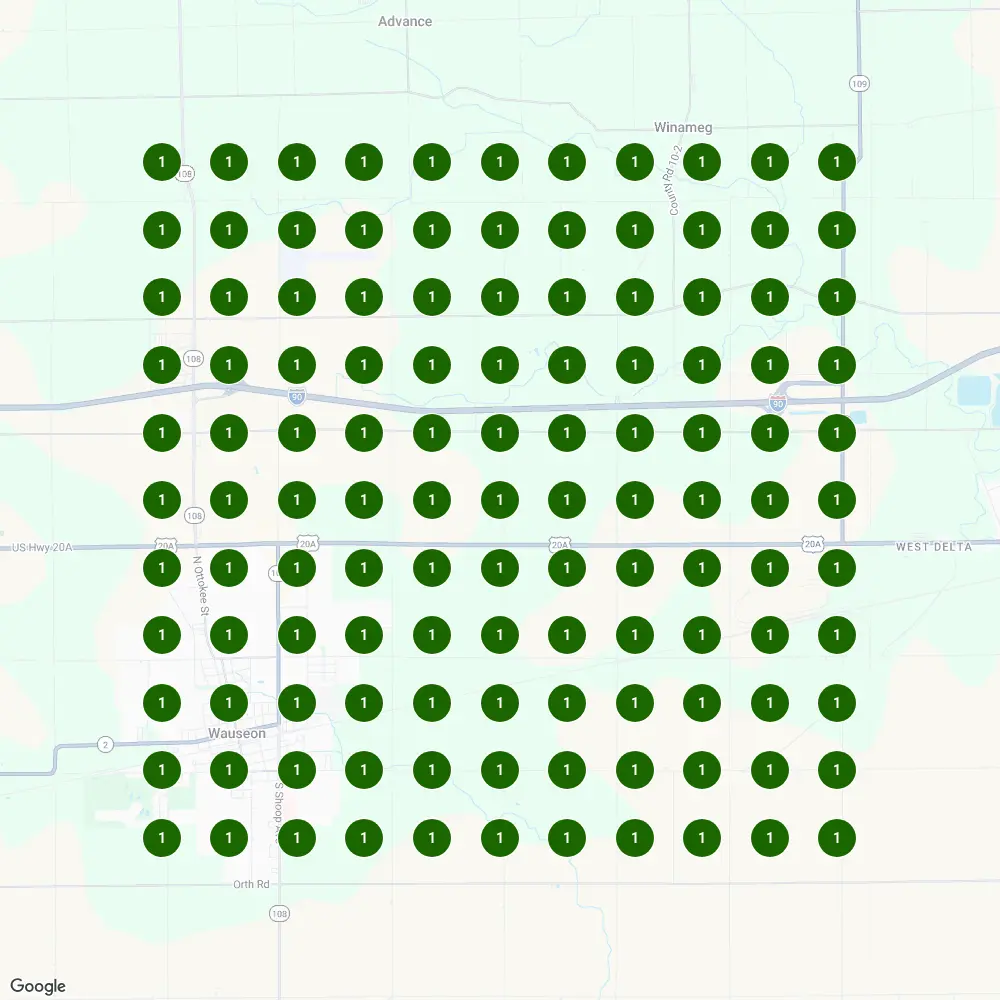
Data: Google Business Profile Insights, March to August 2026
Why Choose Hyxil as Your eCommerce SEO Agency
We report revenue, not sessions
Traffic to a product page nobody buys from is a vanity metric. We track revenue per landing page, category-level performance, and assisted conversions.
12 years of algorithm changes, since 2014
We’ve ranked stores through Panda, Penguin, BERT, the helpful content updates, and now AI shopping. Agencies built on shortcuts don’t survive those. Ours has.
We implement, not just recommend
WordPress, WooCommerce and Next.js in-house. Faceted navigation, schema and Core Web Vitals need code changes. We make them instead of sending a PDF and hoping your developer does.
AI shopping included, not upsold
Product schema, entity clarity and citation tracking are part of how we do eCommerce SEO now, not a separate line item.
Honest about timelines. No long-term contracts
We’ll tell you what’s achievable in 90 days and what takes a year. We keep clients by performing. If we’re not, you should be free to leave.
A 12-year SEO agency, current on AI shopping
Catalogue first. Revenue reporting. Citations on top. One team, no handoffs.
Ready to turn your catalogue into revenue?
Book a free eCommerce SEO audit. We’ll show you exactly what’s blocking your product and category pages, and what it’s costing you.